

In this article



Back to blogs
Physical Security Is a Connectivity Problem: Why Canadian Businesses Are Adding Cloud Video Surveillance and Access Control to Their Network Partner
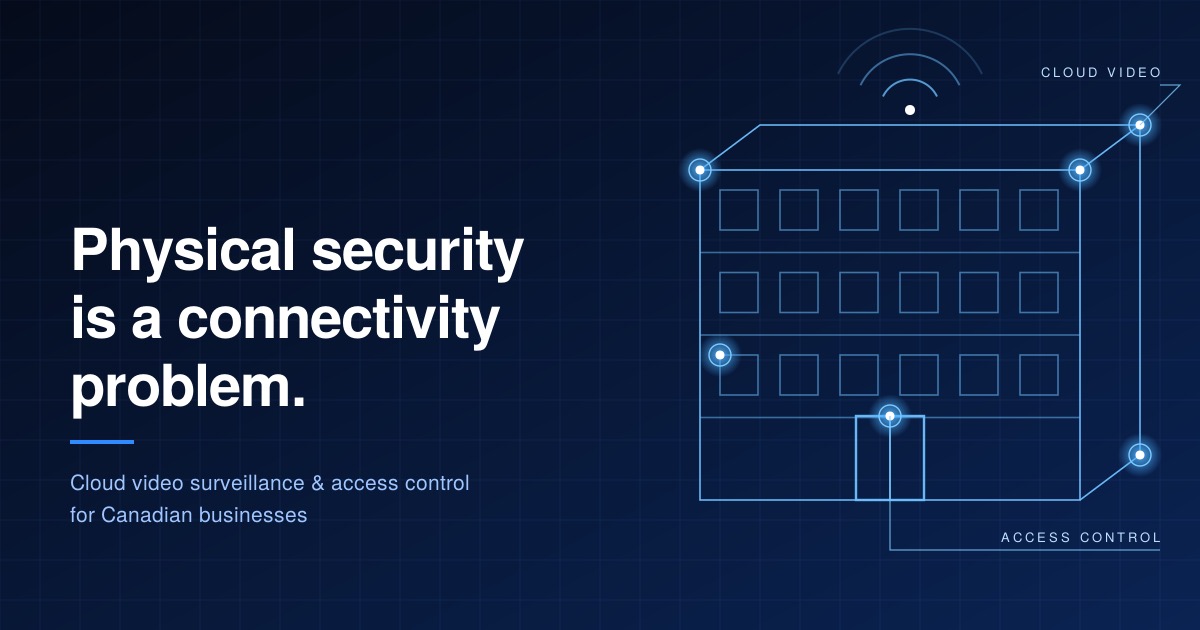
Most businesses buy their cameras, door readers and network from three different vendors. When a camera drops offline at 2 a.m. or a door reader stops syncing, each vendor says the problem is somewhere else. Meanwhile the building is exposed and nobody owns the fix.
Cameras, door controllers and intrusion sensors are all devices on a network. If that network isn't reliable, the security system isn't either. That's why we've partnered with Giltech, a physical security provider specializing in cloud video surveillance, cloud-based access control, intrusion detection, integrated sensor systems, managed Wi-Fi and low-voltage cabling.
For our clients, this means one advisory partner for connectivity and security.
How the partnership works
Each of us does what we do best:
- National Wireless starts with your problem. We assess your sites, recommend the right mix of security and connectivity, and make sure the network under your cameras and doors is reliable, redundant and secure. We're also your point of contact for support.
- Giltech designs, installs and oversees the installation of the physical security system: cameras, door readers, sensors and cabling.
You get specialist installation from a dedicated physical security provider, and you keep the same National Wireless team you already know. There's no need to coordinate between vendors, because you call us.
Access control: from keys to a system of record
Giltech's cloud access control platform replaces scattered keys and standalone readers with one managed system. It supports:
- Credentials: PIN codes, swipe cards, fobs, Bluetooth, wristbands, biometrics and smart watches.
- Reader types: RFID, keypads, card readers, PINs and video intercom.
- Management features: Multi-location management, instant and custom alerts and triggers, remote access, scalability, custom reports, multi-factor authentication (MFA), occupancy management and flexible lockdown.
For an operations or facilities manager, the practical benefit is control. You can add or remove someone's access in seconds, see who entered a space and when, and manage every location from a single dashboard.
Where this fits: industries we already serve
You don't need a new sales conversation for a new market. Giltech fits the industries we already work with.
Education and schools. Giltech combines video surveillance with access control credentials so schools can confirm who is trying to enter. It also supports site-wide lockdowns: a facility can be secured quickly and remotely when something goes wrong. Learn more about how we support Public Safety organizations.
Healthcare. Clinics and care facilities need to control access to medication rooms, records and staff-only areas, with audit trails. Our Healthcare page covers the compliance-aligned connectivity this depends on.
Retail and hospitality. Multi-location operators need consistent security and one view of every site. This extends the consolidation approach we described in Why Retail and Hospitality Operators Are Consolidating Connectivity and Digital Signage Under One Provider. See Retail & Hospitality.
Manufacturing, logistics and utilities. Plants, yards, depots and substations need controlled entry and visibility over large or remote sites. See Manufacturing, Logistics & Transportation and Utilities & Energy.
Construction and field services. Job sites are temporary, remote and exposed to theft. Cellular connectivity makes cameras and access points workable where there is no wired network. See Construction & Field Services.
Why the connectivity layer matters
This is where we differ from a security installer. A security system is only as good as the network under it, and we work on that layer every day:
- Resilient internet: Cameras and door controllers should stay online if a primary line fails. Our Unbreakable Internet architectures use redundant links and carrier failover.
- Sites without fibre: Cellular routers can connect cameras and access control at remote or temporary locations. We covered this in Beyond the Fibre Line.
- Legacy line replacement: Alarm panels, elevator phones and door-entry systems often still rely on copper. Our POTS Replacement service moves them before the sunset deadline.
- Managed IT and cybersecurity: Security devices are network devices, so they need the same protection as any other. See IT Infrastructure.
- Mobility: Security alerts and remote access only help if staff can act on them from managed mobile devices. See Mobility.
What to ask before you buy a security system
Whoever you choose, these questions will save you trouble later:
- What happens to my cameras and doors if the internet goes down?
- Can one platform manage every location, including remote ones?
- Do video and access control work together? You should be able to check a door alert against live video.
- Which credentials are supported? Cards, mobile, biometrics and PINs should all be options.
- Who installs it, and who do I call if something fails? Installation should be handled by specialists, and someone should still own the whole picture, including the network. With National Wireless and Giltech, Giltech installs the system and you call us for support.
Let's talk about your site
Whether you're securing one building or fifty, we'll start by understanding your sites and your network.
Send us a message or call 1-800-268-4566 (Mon–Fri, 8:30am–5:00pm ET). A real person will respond within one business day.
SUBSCRIBE to OUR NEWSLETTER

Oops! Something went wrong while submitting the form.
Related articles
Keep reading
Articles
Physical Security Is a Connectivity Problem: Why Canadian Businesses Are Adding Cloud Video Surveillance and Access Control to Their Network Partner
National Wireless and Giltech bring cloud video surveillance and access control to Canadian businesses, with expert installation and local support.
November 26, 2026
·
7 min read
Read Article
Articles
The 3G Shutdown Is Coming March 1, 2027: What Canadian Businesses Must Replace and How to Do It Fast
Bell and TELUS shut down 3G on March 1, 2027. Learn what breaks, which 3G routers to replace, and how National Wireless handles the upgrade for you.
October 20, 2026
·
10 min
Read Article

Articles
Beyond the Fibre Line: Three Teltonika Deployments and What They Mean for Canadian and U.S. Businesses
From remote energy sites to pop-up retail, see how Teltonika’s RUT241, RUT956 and RUTM50 routers solve real connectivity problems, and what it means for your operations in Canada and the U.S.
October 13, 2026
·
5 min read
Read Article

Technology advisory partner for mid-market and enterprise businesses across Canada.
©1999-2026 National Wireless All rights reserved.

Bell Canada is neither the owner nor the author of this Website, and it is in no way responsible for any of its contents or updates. As such, Bell cannot guarantee the accuracy or timeliness of the information presented in this site. The Bell logo is a trade-mark of Bell Canada, used under licence.
