

In this article



Back to blogs
Articles
April 20, 2026
·
8 min read
What Growing Businesses Get Wrong About Wireless Connectivity — And What It Is Actually Costing Them

What Growing Businesses Get Wrong About Wireless Connectivity — And What It Is Actually Costing Them
A guide for sales and advisory teams navigating connectivity architecture conversations with mid-market operations and technology leaders.
Most growing businesses underinvest in connectivity until something breaks. A dropped video call with a client. A POS system that times out during the busiest hour of the day. A field crew that goes dark for ninety minutes because their site router lost its connection. A backup that was supposed to activate automatically and did not. These incidents are typically treated as isolated annoyances—bad luck, a carrier issue, something for the IT team to look into. They are rarely recognized for what they actually are: symptoms of a structural infrastructure gap that is accumulating cost every day it goes unaddressed.
The organizations that get connectivity right are not necessarily the ones with the biggest IT budgets. They are the ones that made a deliberate architectural decision at some point—usually after experiencing a painful enough failure—to treat connectivity as a business continuity investment rather than a utility expense. Once that decision is made, the conversation changes entirely. It stops being about the cheapest plan and starts being about the right architecture for the operational requirements the business actually has.
This article is designed to help sales and advisory teams frame that conversation with mid-market business leaders across three dimensions:
- What operational concerns are actually driving connectivity investment decisions, even when leaders have not yet named them that way?
- Where do connectivity failures typically originate in mid-market environments?
- Why do standard commercial connectivity solutions keep underperforming for businesses with operational complexity?
How to Start the Conversation
The most effective opening for a mid-market connectivity conversation is not technical. It is operational. Mid-market leaders respond to conversations about productivity loss, client impact, revenue risk, and the hidden cost of connectivity failures far more readily than they respond to conversations about hardware specifications or carrier comparisons. The goal of the opening conversation is not to explain the solution. It is to make the cost of the problem visible.
Most mid-market organizations do not have a clear line item for connectivity-related productivity loss, because those losses are diffuse. They show up as a slow afternoon, a frustrated client, a delayed shipment update, a transaction that had to be re-entered. They are real costs, but they are not tracked, which means they are not weighed against the cost of a connectivity upgrade when budget decisions are made. The advisory role is to make that calculation visible.
The reframe that works consistently in this sector:
- From “What is your current internet plan?” to “What happened the last time your primary connection went down during business hours—and how long did it take to recover?”
- From “Do you have backup connectivity?” to “Has your backup ever been tested under real operational conditions—not just configured and left in place?”
- From “Are you on LTE?” to “How many genuinely independent network paths does your most critical location have, and do you know how they fail over?”
- From “What do you pay per month?” to “What does an hour of downtime cost your business—in staff productivity, in client impact, in transaction volume, and in recovery time?”
Once the cost of the current situation is on the table, the conversation about architecture follows naturally. The solution is not “pay more for better internet.” It is “build the architecture that means you are never making that calculation again.”
What Growing Businesses Are Really Worried About (Even If They Have Not Named It)
Mid-market technology decision-makers are navigating a set of connectivity challenges that are real and growing, but that are often not fully articulated because the organization does not yet have the language or the framework to describe them precisely. Part of the value of a good advisory conversation is giving them that framework.
1. Downtime That Nobody Tracks
Most mid-market businesses do not measure the true cost of connectivity downtime, because it shows up as diffuse operational friction rather than a single, visible line item. A slow afternoon where the team was less productive than usual. A video conference that dropped and had to be rescheduled. A field team that could not access the job management system for an hour and worked off paper instead. Individually, each of these events feels minor. Cumulatively, across a year, across multiple locations, they represent a significant and entirely avoidable cost.
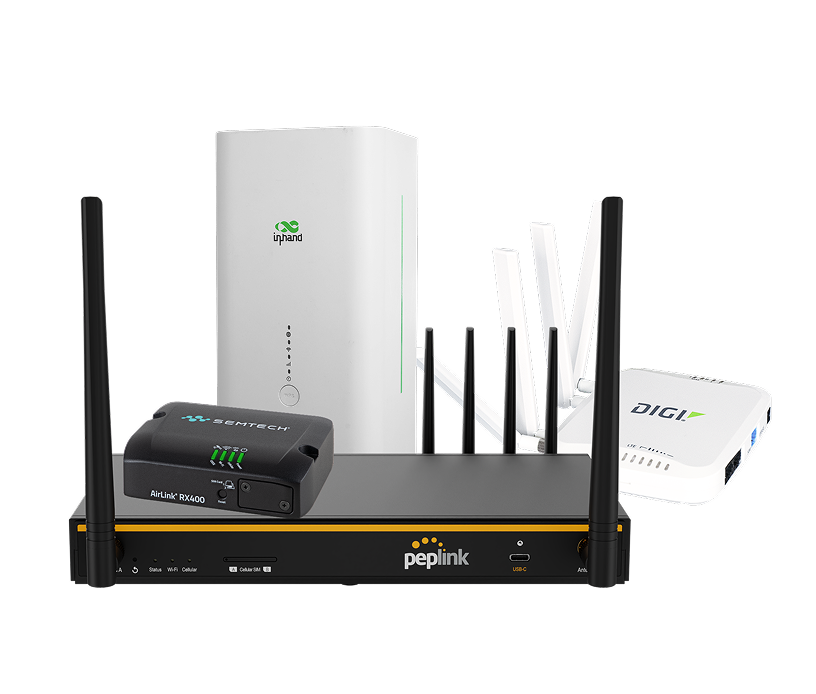
Purpose-built multi-carrier routers with intelligent bonding and automatic failover eliminate this friction by ensuring that the loss of any single network path does not translate into any user-visible disruption. The device is already on the best available path before any single carrier degrades—not after a failover delay that leaves users experiencing a dropped connection while the device negotiates its secondary path.
2. Single-Carrier Dependency Disguised as Redundancy
One of the most common connectivity misconceptions in the mid-market is the belief that having two connections means having genuine redundancy. In many cases, this belief is mistaken—and the organizations that discover this tend to discover it at the worst possible moment. Two connections from the same provider, or two connections that share the same last-mile physical infrastructure, are not independent paths. They are two connections with the same single point of failure.
True redundancy requires genuinely independent network paths: multi-carrier cellular, fixed broadband from different infrastructure providers, and satellite—managed through intelligent bonding technology that distributes and reroutes traffic in real time based on path performance. SpeedFusion bonding does not simply fail over from one path to another. It bonds multiple paths simultaneously, distributing traffic intelligently across all available connections and maintaining session continuity even if one path degrades completely. The result is not faster failover. It is no user-visible failure at all.
3. Connectivity That Was Not Designed for How the Business Actually Operates
A connectivity solution designed for a static office environment does not automatically work for a business with field crews, temporary sites, vehicles, multiple locations, or any combination of operational complexity that requires connectivity to move with the work rather than stay fixed at a desk. The hardware, the carrier selection, the bonding architecture, and the management layer all need to reflect the operational reality of the business—not a generic enterprise template that was designed for a different use case.
The gap between what a standard business connectivity solution was designed to do and what a mid-market organization with operational complexity actually needs it to do is often invisible until a specific failure event makes it obvious. A field crew router that loses connectivity in a low-signal area because it was not configured for multi-carrier operation. A temporary site setup that works in the parking lot during testing and fails inside the building on the first day of operation. A vehicle tracking system that stops reporting because the LTE modem it depends on is on a carrier with no coverage at the job site. Each of these is a solvable problem—but only if the architecture was designed with the actual operating environment in mind.
Where Connectivity Failures Originate in Mid-Market Environments
The failure modes that matter most for mid-market connectivity fall into three predictable categories. Single-carrier dependency at any critical location—whether a fixed site, a vehicle, or a field asset—creates a resilience profile that is only as strong as that carrier’s coverage and uptime at that specific location, at that specific moment. Untested failover architecture—secondary connections that were configured during initial deployment and never verified under real operational conditions—provides a documented capability that may not exist in practice. And connectivity solutions designed for a different operating context—standard office internet for a business with field operations, consumer-grade equipment for a business with mission-critical transaction systems—create a persistent gap between what the architecture provides and what the business actually requires.
How to Turn This Into a Productive Conversation
For mid-market operations and technology leaders, the most effective conversations connect infrastructure architecture to business outcomes that the leader is already accountable for. Productivity. Client experience. Revenue continuity. Operational visibility. The ability to scale the business to new locations or new operating models without rebuilding the technology foundation at each step.
Position connectivity architecture not as a technology purchase, but as a business continuity investment with a calculable return. Make the cost of the current situation visible before presenting the cost of the solution. And always frame the conversation around the specific operational complexity of the business in front of you—because the most credible thing you can do in an advisory conversation is demonstrate that you understand how the business actually operates, not just how businesses in general tend to be configured.
The organizations that invest in the right connectivity architecture do not spend more money than the organizations that stay with standard commercial solutions. They spend differently—and they stop paying the invisible, uncounted costs that come with infrastructure that was not designed for their operational requirements.
Related articles
Keep reading

Articles
Beyond the Fibre Line: Three Teltonika Deployments and What They Mean for Canadian and U.S. Businesses
From remote energy sites to pop-up retail, see how Teltonika’s RUT241, RUT956 and RUTM50 routers solve real connectivity problems, and what it means for your operations in Canada and the U.S.
October 13, 2026
·
5 min read
Read Article
Articles
What Growing Businesses Get Wrong About Wireless Connectivity — And What It Is Actually Costing Them
Most growing businesses underinvest in connectivity until something breaks. This guide helps sales and advisory teams make the hidden cost of connectivity failures visible to mid-market leaders and frame the conversation around architecture, redundancy, and business continuity.
April 20, 2026
·
8 min read
Read Article

Articles
Why Retail and Hospitality Operators Are Consolidating Connectivity and Digital Signage Under One Provider
Fragmented technology relationships across multi-location retail and hospitality operations create more risk than they eliminate. This guide explores why operators are consolidating connectivity, digital signage, and network management under a single provider for brand consistency, operational control, and guest experience.
April 20, 2026
·
7 min read
Read Article

Technology advisory partner for mid-market and enterprise businesses across Canada.
©1999-2026 National Wireless All rights reserved.

Bell Canada is neither the owner nor the author of this Website, and it is in no way responsible for any of its contents or updates. As such, Bell cannot guarantee the accuracy or timeliness of the information presented in this site. The Bell logo is a trade-mark of Bell Canada, used under licence.
