

In this article



Back to blogs
Connectivity
October 31, 2024
·
7 min read
The POTS Sunset in Canada: What Your Business Needs to Do Before the Deadline

Plain Old Telephone Service — the copper telephone network that has been part of Canadian business infrastructure since the late 1800s — is being decommissioned. Canadian carriers are actively sunsetting their POTS networks, and the deadline is closer than most businesses realise. For organisations that have not yet audited their copper dependencies, the window to plan a considered migration is narrowing.
What the POTS Sunset Actually Means
When carriers decommission POTS infrastructure, the physical copper lines that businesses depend on for legacy services stop working. Unlike a service disruption, there is no restoration — the infrastructure is simply gone. Any service running on those lines stops permanently.
The challenge is that most organisations do not have a complete picture of every service running on copper. Alarm systems, elevator phones, fax machines, back-office telephone lines, credit card terminals, and point-of-sale systems have often been running on the same copper infrastructure for decades — sometimes without appearing in any IT asset register or telecom invoice audit.
Which Businesses Are Most Exposed
The businesses with the greatest POTS exposure share common characteristics: they have been operating from the same facilities for many years, they have legacy alarm or security systems, they process payments on older terminal hardware, or they operate in regulated industries where fax communication is still required.
- Healthcare — Nurse call systems, emergency alert panels, and fax lines for clinical communications are frequently copper-dependent.
- Retail and hospitality — Alarm systems, elevator phones, and legacy POS terminals at older locations.
- Financial services — Branch alarm systems, fax lines, and legacy telephony at regional offices.
- Utilities and industrial — SCADA telemetry lines, remote monitoring systems, and alarm signalling equipment at remote sites.
- Property management — Elevator emergency phones, entry system call buttons, and building management systems.
What a Properly Planned POTS Migration Looks Like
The difference between a well-managed POTS migration and a reactive one is the audit that precedes it.
Step 1: Complete Dependency Audit
Every copper line at every location, mapped to the service it supports and the risk associated with losing it. Alarm systems have different urgency than fax lines. Safety-critical equipment has different priority than back-office telephony.
Step 2: Technology Selection
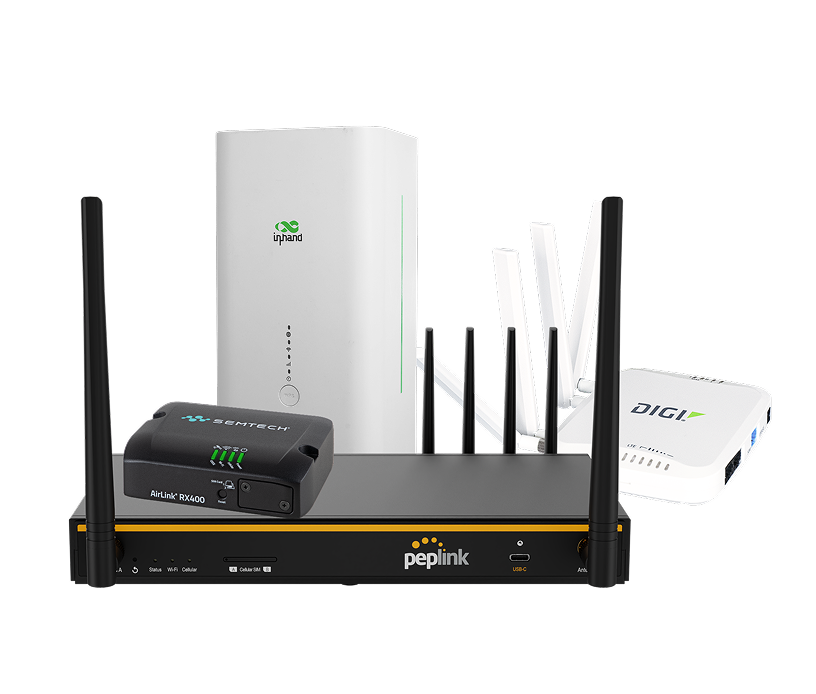
Not every POTS dependency has the same replacement. Alarm signalling systems typically migrate to cellular backup units. Elevator phones move to cellular or VoIP alternatives. Fax lines migrate to cloud fax or SIP trunking. Business telephony migrates to VoIP or hosted PBX. Each requires a different approach and different hardware.
Step 3: Sequenced Migration
The migration plan sequences cutovers to maintain service continuity throughout — ensuring that no location loses a critical service at any point during the transition. Alarm systems and safety-critical equipment are typically migrated last, after the replacement technology has been validated at lower-risk locations.
Step 4: Post-Migration Validation
Every replaced service is tested in production before the copper line is disconnected. The validation confirms that the replacement works under real operational conditions — not just in a test environment.
The Cost of Waiting
The businesses that wait until their carrier announces a specific cutover date will have two problems: inadequate time to plan a proper migration, and limited availability of migration partners and hardware during what will be a compressed, high-demand period.
The organisations that move now — while the window is still open for deliberate planning — will have significantly better outcomes than those that respond to a deadline. If you have not yet done a POTS dependency audit for your locations, that is the right place to start.
Related articles
Keep reading

Articles
Beyond the Fibre Line: Three Teltonika Deployments and What They Mean for Canadian and U.S. Businesses
From remote energy sites to pop-up retail, see how Teltonika’s RUT241, RUT956 and RUTM50 routers solve real connectivity problems, and what it means for your operations in Canada and the U.S.
October 13, 2026
·
5 min read
Read Article

Articles
What Growing Businesses Get Wrong About Wireless Connectivity — And What It Is Actually Costing Them
Most growing businesses underinvest in connectivity until something breaks. This guide helps sales and advisory teams make the hidden cost of connectivity failures visible to mid-market leaders and frame the conversation around architecture, redundancy, and business continuity.
April 20, 2026
·
8 min read
Read Article

Articles
Why Retail and Hospitality Operators Are Consolidating Connectivity and Digital Signage Under One Provider
Fragmented technology relationships across multi-location retail and hospitality operations create more risk than they eliminate. This guide explores why operators are consolidating connectivity, digital signage, and network management under a single provider for brand consistency, operational control, and guest experience.
April 20, 2026
·
7 min read
Read Article

Technology advisory partner for mid-market and enterprise businesses across Canada.
©1999-2026 National Wireless All rights reserved.

Bell Canada is neither the owner nor the author of this Website, and it is in no way responsible for any of its contents or updates. As such, Bell cannot guarantee the accuracy or timeliness of the information presented in this site. The Bell logo is a trade-mark of Bell Canada, used under licence.
