

Dans cet article


Retour aux blogues
Articles
October 20, 2026
·
10 min
The 3G Shutdown Is Coming March 1, 2027: What Canadian Businesses Must Replace and How to Do It Fast
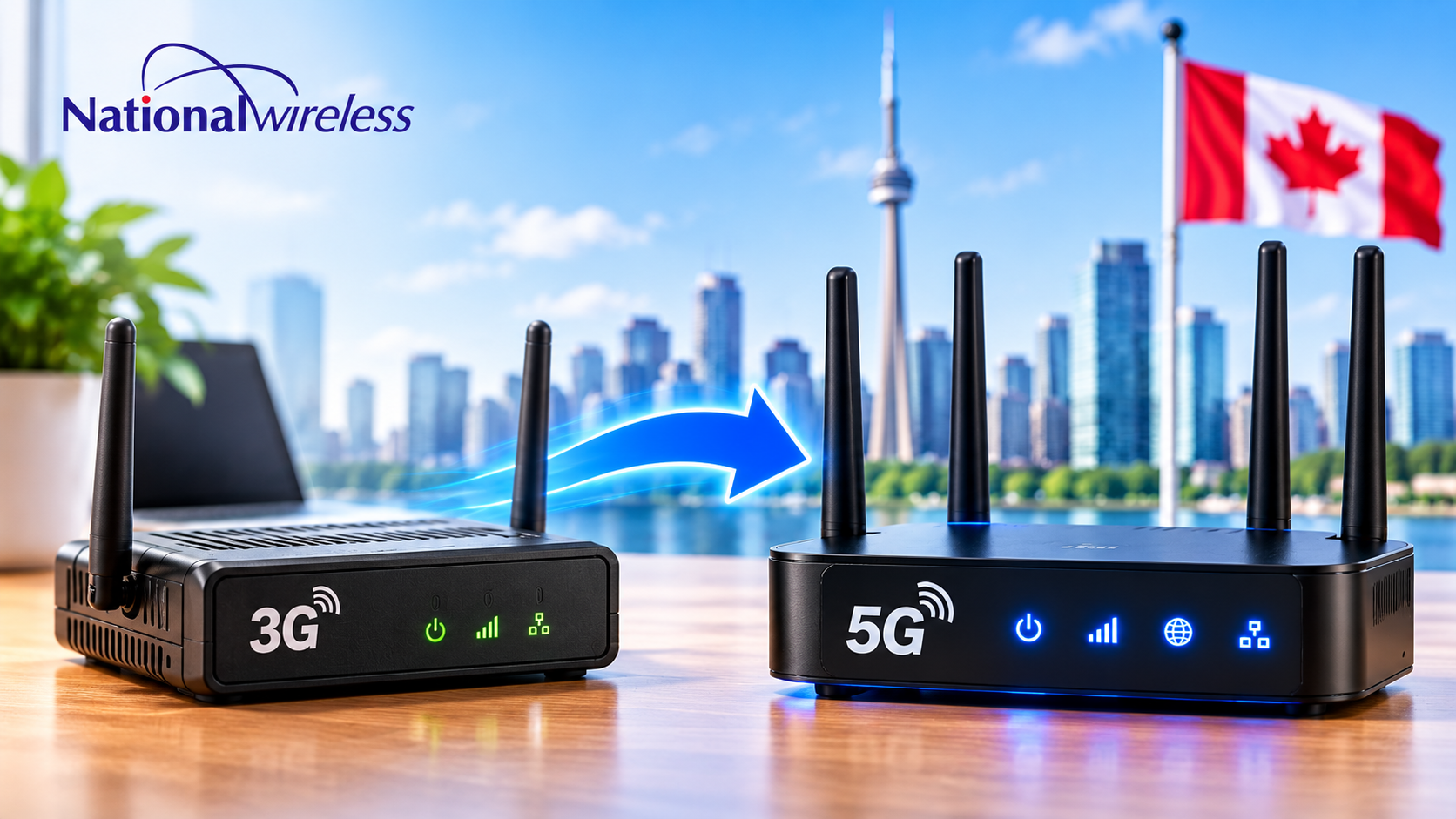
Bell and TELUS will shut down their 3G networks nationally on March 1, 2027. Any business still running a 3G router, modem, or gateway will lose data connectivity on that date, and with less than five months left, the time to replace them is now. The fastest, lowest-risk way to do it is with a single managed partner. National Wireless has helped more than 5,000 Canadian businesses over 38+ years. Book your free 3G audit and we will tell you exactly what needs to change.
What is the 3G shutdown in Canada?
Canadian carriers are retiring their 3G (HSPA) networks to free up spectrum for faster, more reliable 4G LTE and 5G. The rollout is already underway:
• Rogers began retiring 3G on August 7, 2025.
• Vidéotron began on July 31, 2025.
• Bell (including Virgin) and TELUS (including Koodo) shut down 3G nationally on March 1, 2027, after earlier cutovers in Manitoba.
• SaskTel follows on October 1, 2027.
After the cutoff, devices that depend on 3G stop connecting. TELUS states that non-compatible devices lose the ability to make or receive calls, send texts, or use data, including access to 911 on phones. For businesses, the bigger exposure is usually not the phones. It is the equipment nobody thinks about.
Which business equipment still runs on 3G?
Most companies are surprised by how much 3G hardware is hiding in their operations. Check for:
• Cellular routers and gateways at branch offices, job sites, kiosks, and backup WAN links
• Alarm panels and security systems that report over 3G cellular communicators
• Fleet telematics and GPS trackers in trucks, vans, and heavy equipment
• Point-of-sale terminals, digital signage, and ATMs connected through 3G modems
• SCADA, RTUs, and remote monitoring devices at utility, energy, and industrial sites
• Building automation, elevator, and fire panel communicators that replaced copper lines
• Smart meters, sensors, and asset trackers deployed years ago and forgotten
• Older business phones and tablets that are not VoLTE-capable
If a device was installed between roughly 2010 and 2018 and has a cellular SIM, assume it needs to be checked.
What happens if you do nothing?
On March 1, 2027, 3G-only equipment does not degrade gracefully. It goes dark. Depending on what you run, that can mean:
• Lost uptime and revenue: branch, retail, and POS locations fall offline.
• Silent safety and compliance gaps: alarm, fire, elevator, and monitoring systems stop reporting without any on-site warning.
• Blind fleets and assets: you lose live tracking, dispatch data, and driver safety insights.
• Truck rolls at the worst time: every site that needs a technician visit competes for the same installers in the final weeks.
• Supply and scheduling pressure: every organization with 3G gear faces the same deadline, so hardware and installer availability tightens as March 1 approaches.
Businesses that move early can plan calm, scheduled installs. Businesses that wait risk emergency calls and outages.
Do not wait for the last 60 days. Request your 3G replacement quote today and lock in your install window.
How to replace your 3G routers (and not just swap them)
A like-for-like swap fixes the deadline. A smart upgrade fixes the deadline and the next ten years. Here is the approach we recommend:
1. Audit every cellular device. Build an inventory of routers, modems, gateways, and IoT devices, including model, SIM, location, and what each one supports.
2. Choose the right replacement technology. Most sites move to 4G LTE or 5G business routers. Remote and rugged sites may need industrial-grade routers and high-gain antennas.
3. Add redundancy while you are there. Dual-SIM and multi-carrier failover turn a single point of failure into a resilient connection.
4. Confirm the carrier plan. New hardware needs the right data plan and provisioning, or it will not connect.
5. Deploy and centrally manage. Install on a schedule that avoids downtime, then monitor every device from one portal.
Hardware built for the post-3G world
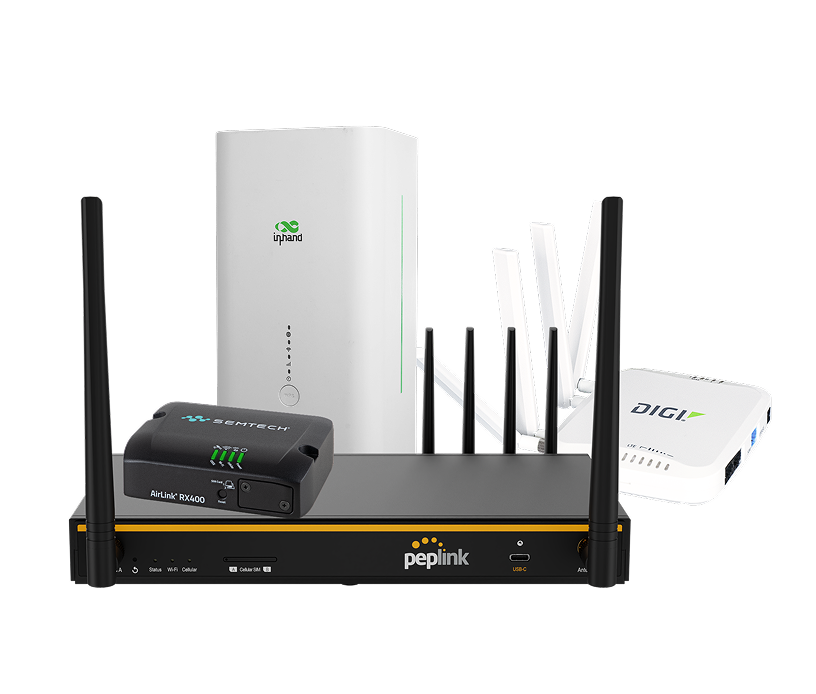
National Wireless supplies connectivity hardware from the manufacturers businesses already trust: Digi, InHand, Peplink, Semtech, and Teltonika routers, plus Panorama, Poynting, and Taoglas antennas for stronger signal in rural and difficult locations. Because we are vendor-agnostic and work across all major carriers, we recommend what fits your sites, not what fits a single brand. Browse the connectivity hardware store or let us spec it for you.
In one example, Setpoint replaced consumer routers with industrial Digi cellular modems for remote building automation, and reports 10+ years of uninterrupted connectivity, managed centrally through the Digi portal.
One partner for the whole migration
The 3G shutdown is rarely just a router problem. Most businesses discover related gaps once they start the audit. National Wireless covers every layer, so one call can solve all of them:
Service
What it does for your 3G migration
Replacement 4G LTE and 5G routers and antennas from leading manufacturers
Upgrade 3G trackers, sensors, and industrial IoT, including asset tracking and fleet monitoring
Move alarm, fire, elevator, and line-based systems off copper and off 3G onto modern connections before the sunset deadline
Redundant, multi-path connectivity designed for 100% uptime on critical operations
High-availability links for utilities, public safety, and essential services
Enterprise mobile device management, carrier optimization, and replacement of non-VoLTE phones and tablets
WAN connectivity, fixed wireless, unified communications, and contact centre solutions
Managed services, cybersecurity, and cloud solutions to protect the new network
Business data plans matched to your upgraded devices
Need it all handled? Our full lifecycle management covers consultation, deployment, and ongoing support, so your team does not have to coordinate carriers, vendors, and installers on its own. Talk to a 3G migration specialist or call 1-800-268-4566.
Industry-specific risks we solve every day
• Utilities and Energy: SCADA links, remote monitoring, and distributed energy sites cannot drop offline.
• Public Safety: high-availability communications for emergency services.
• Healthcare: compliance-aligned connectivity, mobility, and POTS migration.
• Logistics and Transportation: fleet monitoring, asset tracking, and operational connectivity.
• Construction and Field Services: worker safety, IoT, and mobile workforce across job sites.
• Manufacturing: industrial IoT, plant connectivity, and operational technology.
• Retail and Hospitality: multi-site connectivity, POTS replacement, and IoT.
• Professional Services: telecom consolidation, IT infrastructure, and managed mobility.
Do not see your sector? Send us a message. The problem matters more than the industry.
Why Canadian businesses choose National Wireless
• 38+ years in business and 5,000+ businesses served.
• Advisory-first. We recommend the right technology mix for your goals, not whatever is on the shelf.
• Vendor-agnostic. We work across all major carriers and manufacturers, so the recommendation is unbiased.
• Full lifecycle management. From first consultation through deployment and ongoing support.
• 24/7 support and real people. Customers consistently tell us they get a response within hours, not days, from Canadian-based support.
3G migration checklist
☐ List every device with a cellular SIM (routers, alarms, trackers, POS, sensors, signage)
☐ Flag anything 3G-only or dependent on 3G fallback
☐ Check each site's 4G/5G signal strength and antenna needs
☐ Decide which sites need redundancy or failover
☐ Confirm data plans and SIM provisioning for new hardware
☐ Schedule installs well before March 1, 2027
☐ Set up central monitoring for every upgraded device
Frequently asked questions
When does the 3G network shut down in Canada? Bell and TELUS retire 3G nationally on March 1, 2027. Rogers and Vidéotron began in 2025, and SaskTel follows on October 1, 2027.
Will my 3G router stop working? If it is 3G-only, yes. It will lose its data connection once your carrier shuts the network down. Routers that support 4G LTE or 5G may continue to work, but they still need to be verified for compatibility, firmware, and provisioning.
What should I replace my 3G router with? Most businesses upgrade to a 4G LTE or 5G business router. Sites that cannot afford downtime should add dual-SIM or multi-carrier failover. National Wireless will recommend the right model for each location.
Does the shutdown affect alarm panels, elevators, and fire systems? Potentially, yes, if they report over 3G cellular. Our POTS replacement team can help you move these to a modern, reliable connection.
Can National Wireless handle multiple locations? Yes. We manage multi-site audits, procurement, deployment, and ongoing monitoring across Canada.
How do I get started? Call 1-800-268-4566, email ccc@natcel.com, or request a quote online. A real person responds within one business day, usually faster.
Your 3G deadline is not moving. Your window to upgrade is shrinking.
The closer March 1, 2027 gets, the harder it is to book installs, and the risk of an outage grows. National Wireless will audit your 3G devices, recommend the right replacements, install them, and keep them running, all from one accountable partner.
Book your free 3G audit now | Shop 4G/5G routers | Call 1-800-268-4566 (Mon to Fri, 8:30am to 5:00pm ET)
Articles connexes
Continuez à lire
Articles
The 3G Shutdown Is Coming March 1, 2027: What Canadian Businesses Must Replace and How to Do It Fast
Bell and TELUS shut down 3G on March 1, 2027. Learn what breaks, which 3G routers to replace, and how National Wireless handles the upgrade for you.
October 20, 2026
·
10 min
Lire l'article

Articles
Beyond the Fibre Line: Three Teltonika Deployments and What They Mean for Canadian and U.S. Businesses
From remote energy sites to pop-up retail, see how Teltonika’s RUT241, RUT956 and RUTM50 routers solve real connectivity problems, and what it means for your operations in Canada and the U.S.
October 13, 2026
·
5 min read
Lire l'article
Connectivité
Systèmes d'alarme et le coucher du soleil POTS : ce que les intégrateurs de sécurité ne vous disent pas
Lors de la planification d'une migration POTS, votre intégrateur de sécurité peut recommander un remplacement complet du panneau d'alarme. Dans de nombreux cas, un module de communication à une fraction du coût est tout ce dont vous avez besoin.
June 30, 2024
·
6 min de lecture
Lire l'article

Partenaire de conseil en technologie pour les entreprises du marché intermédiaire et des entreprises partout au Canada.
©1999-2026 National Wireless Tous droits réservés.

Bell Canada n'est ni le propriétaire ni l'auteur de ce site Web, et elle n'est aucunement responsable de son contenu ou de ses mises à jour. Par conséquent, Bell ne peut garantir l'exactitude ou l'actualité des renseignements présentés sur ce site. Le logo Bell est une marque de commerce de Bell Canada, utilisée sous licence.
