

Dans cet article



Retour aux blogues
Articles
October 13, 2026
·
5 min read
Beyond the Fibre Line: Three Teltonika Deployments and What They Mean for Canadian and U.S. Businesses

Every operation has a spot where the network doesn’t reach: a solar array on a rural concession road, a street corner where trenching fibre would take a year, or a vacant storefront you’re leasing for three weeks. In Canada and the U.S., these gaps are common, and cellular routers are how more organizations are closing them.
Teltonika Networks recently published three use cases that show this well. None of them happened in a Canadian city, but the problems behind them are familiar to utilities, municipalities and retailers here. Below is what each deployment did, and how the lessons apply to your operation.
1. Remote energy sites: the RUT241
The deployment: ENcombi, an energy management company, monitors solar (PV) systems, battery storage, grid connections and generators from one cloud platform called ECcloud. Many of its sites are remote or rural, with no fibre available. Each site uses a Teltonika RUT241 4G router to send data back to ECcloud, either over cellular or over the customer’s existing Wi-Fi or wired network. Operators can also reach on-site equipment remotely, using links generated through the Teltonika REST API and secure VPN tunnels, without sending a technician.
Why it matters: Teltonika cites a study of photovoltaic plants in which inefficiencies accounted for roughly 22% to 28% of net energy yield, a larger share than equipment failures. You can’t fix what you can’t see, and distributed assets such as DER sites, battery storage and standby generation are often exactly where connectivity is weakest.
The Canadian and U.S. angle: As distributed energy grows, utilities and energy operators need visibility into many small sites, often built by different vendors. The connectivity layer has to be reliable, secure and manageable at scale. This ties directly to the SCADA and OT conversations we have with utilities, which we cover in What Utilities and Energy Companies Are Really Buying When They Invest in Connectivity. Learn more about our work in Utilities & Energy and Mission Critical Connectivity.
2. Urban surveillance without trenching: the RUT956 and TSW202
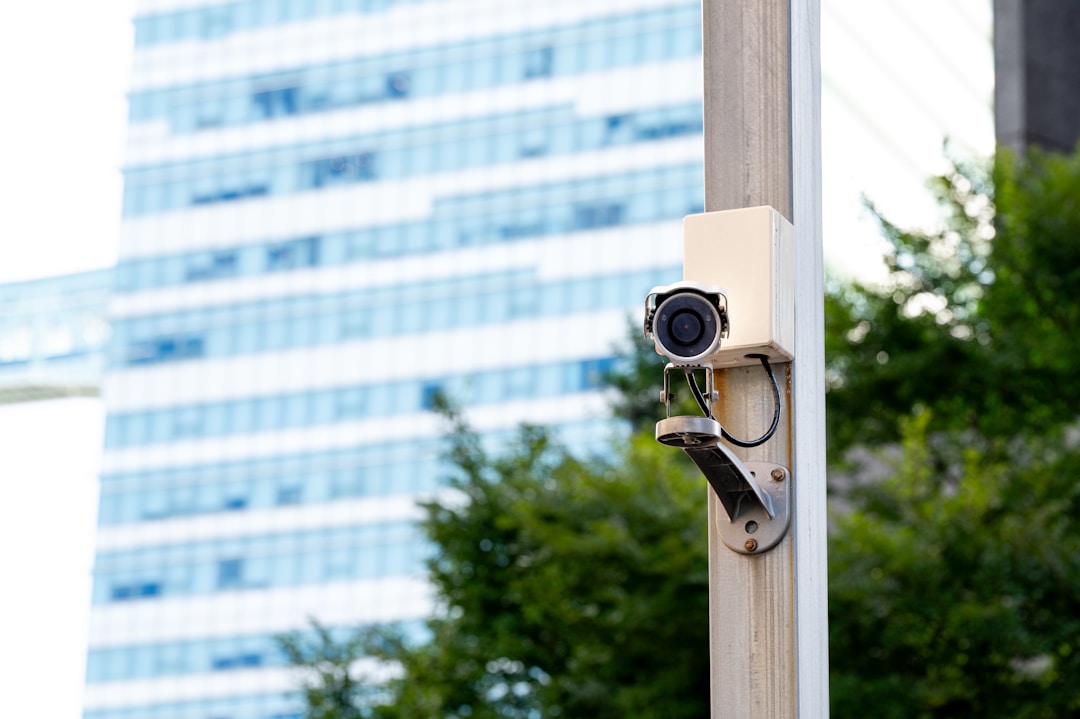
The deployment: In Santiago, Chile, systems integrator SISTEK built a smart surveillance pole that combines public lighting, cameras, a UPS and connectivity in one sealed unit. Inside is a Teltonika RUT956 industrial router with dual-SIM 4G, automatic failover between two carriers, load balancing, VPN and a firewall. A TSW202 managed PoE switch powers and connects two cameras, one of them with licence plate recognition. Operators manage everything through Teltonika’s Remote Management System (RMS), monitoring signal strength, pushing firmware updates and troubleshooting remotely.
Why it matters: Wired surveillance depends on infrastructure that is slow and expensive to build. A self-contained pole with cellular backhaul can go up quickly, and it stays online because the router switches carriers if one fails.
The Canadian and U.S. angle: Municipalities, transit authorities, parking operators and industrial sites all face this challenge. They need cameras, traffic equipment, sensors or access control in places where the network doesn’t reach, and where downtime is unacceptable. Our 24/7 traffic monitoring case study shows what reliable remote infrastructure looks like in practice. For more on public-sector use, see our Public Safety and Unbreakable Internet pages.
3. Pop-up retail and events: the RUTM50
The deployment: Teltonika’s third use case covers pop-up shops and events. It cites figures that U.S. pop-up retail generates up to US$80 billion a year, and that 44% of pop-ups cost less than US$5,000 to open. Their weakness is connectivity. Without it, payment terminals, tablets, AR/VR demos and people counters become difficult or impossible to run. The RUTM50 5G router addresses this with speeds of up to 3.4 Gbps and fallback to LTE Cat 19 where 5G isn’t available. It supports both SA and NSA 5G architectures and is FCC-certified, designed with North American frequency bands in mind. It has five Ethernet ports, GNSS and digital I/O, and its aluminium housing is rated for -40 °C to 75 °C and mounts on a DIN rail.
Why it matters: For pop-ups, the router is the infrastructure. It can power point-of-sale terminals and cameras over Ethernet, provide Wi-Fi for guests and staff, and support sensors that measure foot traffic.
The Canadian and U.S. angle: Think of pop-up retail, seasonal kiosks, trade show booths, festivals, construction site offices, mobile clinics and temporary sites. Any of these can be up and running in hours when connectivity doesn’t depend on a landlord’s or carrier’s install schedule. Our Retail & Hospitality page covers more on multi-site and temporary-site connectivity.
What these three have in common
The industries differ, but the pattern is the same:
- Cellular is a primary connection, not just a backup. In all three cases, fibre wasn’t available or wasn’t practical.
- Remote management is part of the solution. Whether through ECcloud, RMS or VPN access, teams can monitor and fix equipment without a site visit.
- Redundancy is designed in. Dual SIMs, fallback to LTE and failover between wired and wireless links keep critical systems running.
- The right hardware depends on the job. A 4G router for energy telemetry, an industrial router with a PoE switch for cameras, and a 5G router for high-bandwidth retail each fit a different need.
Choosing the right setup in Canada and the U.S.
Hardware is only part of a successful deployment. Carrier selection, frequency bands, certifications, SIM and data plan strategy, and how the router connects to your existing systems all affect the result. Because Teltonika sells models for different regions, the specific variant you choose should be checked against the networks you’ll use.
That’s where we come in. We are a Teltonika reseller, and our advisory-first approach means we start with your problem and recommend the right mix of hardware, carriers and management tools, whether or not that mix includes Teltonika. We also manage the lifecycle after deployment, from procurement and configuration to ongoing support.
You can browse Teltonika and other connectivity hardware in our store, explore our IoT solutions, or read more about our partners.
Let’s talk about your site
Have a remote site, a stalled infrastructure project or a temporary location that needs reliable connectivity? Send us a message or call 1-800-268-4566 (Mon-Fri, 8:30am-5:00pm ET). A real person will respond within one business day.
Source use cases: Teltonika Networks, Global remote energy management using RUT241 4G connectivity; How RUT956 and TSW202 power urban surveillance in Chile; 5G router for pop-up event connectivity.
Articles connexes
Continuez à lire
Articles
Beyond the Fibre Line: Three Teltonika Deployments and What They Mean for Canadian and U.S. Businesses
From remote energy sites to pop-up retail, see how Teltonika’s RUT241, RUT956 and RUTM50 routers solve real connectivity problems, and what it means for your operations in Canada and the U.S.
October 13, 2026
·
5 min read
Lire l'article
Connectivité
Systèmes d'alarme et le coucher du soleil POTS : ce que les intégrateurs de sécurité ne vous disent pas
Lors de la planification d'une migration POTS, votre intégrateur de sécurité peut recommander un remplacement complet du panneau d'alarme. Dans de nombreux cas, un module de communication à une fraction du coût est tout ce dont vous avez besoin.
June 30, 2024
·
6 min de lecture
Lire l'article

Articles
Ce que les entreprises en croissance se trompent au sujet de la connectivité sans fil — et ce que cela leur coûte réellement
La plupart des entreprises en croissance sous-investissent dans la connectivité jusqu'à ce que quelque chose se brise. Ce guide aide les équipes de vente et de conseil à rendre visible les coûts cachés des défaillances de connectivité pour les leaders du marché intermédiaire et à encadrer la conversation sur l'architecture, la redondance et la continuité des activités.
April 20, 2026
·
8 min de lecture
Lire l'article

Partenaire de conseil en technologie pour les entreprises du marché intermédiaire et des entreprises partout au Canada.
©1999-2026 National Wireless Tous droits réservés.

Bell Canada n'est ni le propriétaire ni l'auteur de ce site Web, et elle n'est aucunement responsable de son contenu ou de ses mises à jour. Par conséquent, Bell ne peut garantir l'exactitude ou l'actualité des renseignements présentés sur ce site. Le logo Bell est une marque de commerce de Bell Canada, utilisée sous licence.
